
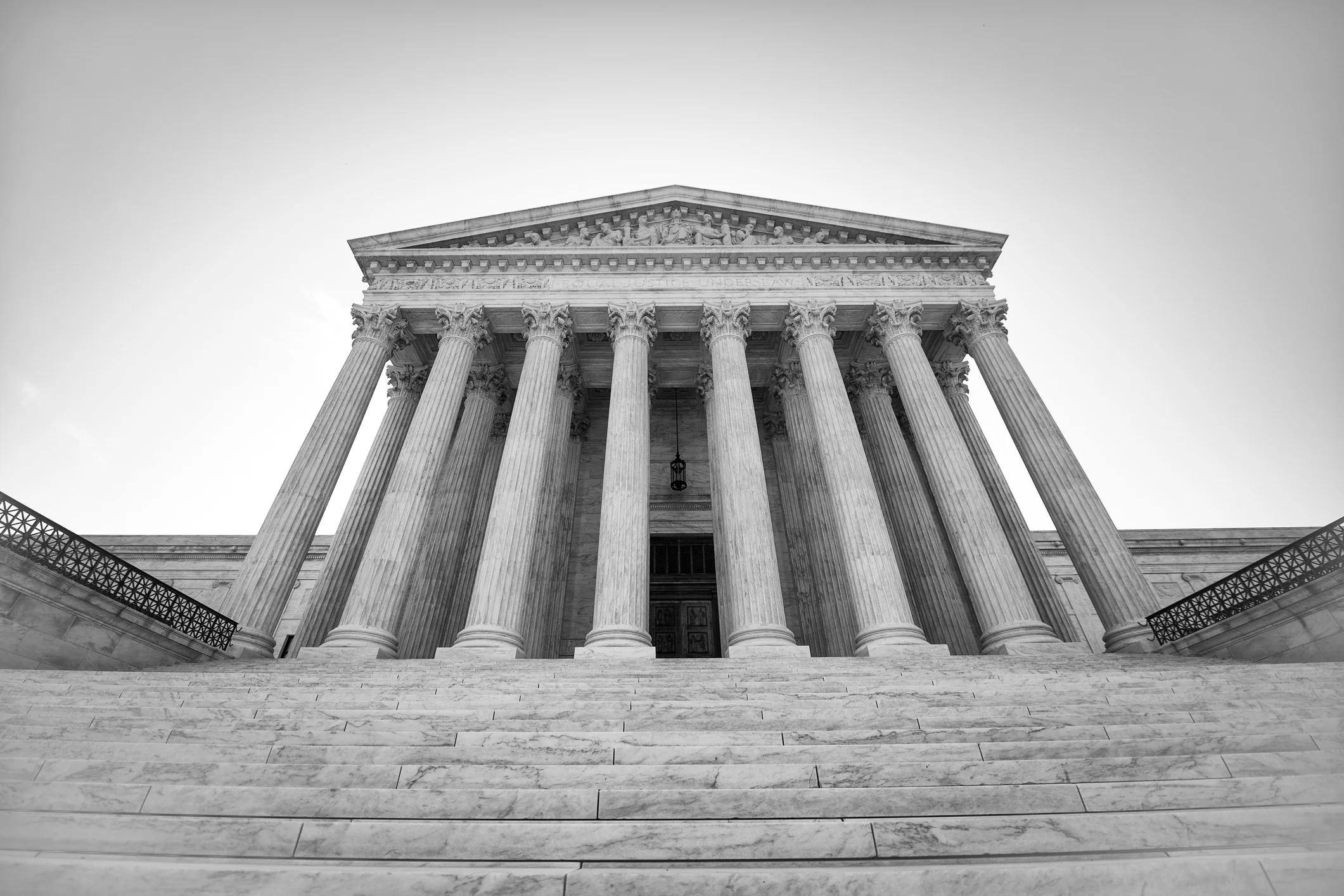
On June 23, 2021, the Court held that the generality of an alleged misstatement is relevant to whether that misstatement impacted the price of a security, and courts should therefore consider the materiality of the statement when deciding whether a plaintiff may invoke the Basic presumption of reliance at the class certification stage, even if that exercise overlaps with merits issues.
Read MoreEven if you're not one of the 4.5 million Americans who are bitten by dogs every year, you can feel the sting from dog bites in the form of rising home insurance premiums.
In 2018, bites cost insurers $675 million, which was one-third of all the money paid out in homeowners liability claims last year, according to State Farm and the Insurance Information Institute.
The toll from vicious dogs is far higher in some states than in others. We count down the 20 worst states for dog bites, the ones with the highest numbers of insurance claims in 2018. If you're a dog owner, be smart. Everyone else: Be safe!
Read MoreThe Michigan Supreme Court has tightened the legal standard for searching people during a traffic stop. The court unanimously ruled in favor of a car passenger who said his rights were violated when police in Jackson County searched his backpack without his consent.
Read MoreThe Eleventh Circuit Court of Appeals recently confirmed school officials’ governmental immunity in a Fourth Amendment challenge to a search of one high school student’s cell phone.
Read MoreFormer emergency managers in Flint acted as officers or employees of the state before and during the city’s water crisis and lawsuits against them must be considered by the Michigan Court of Claims, the state Court of Appeals said in a decision Thursday, Jan. 24.
Read MoreThe Michigan Court of Appeals has upheld a pair of state budget appropriations that reimburse private schools for the cost of fire drills, inspections and other state requirements.
Read MoreA federal court says the owners of three dogs killed by Detroit police during a raid can pursue a civil rights lawsuit against the officers.
The 6th U.S. Circuit Court of Appeals says the owners were entitled to due process. In a 2-1 opinion Monday, the court says a Fourth Amendment right against unreasonable seizure applies in two of the three dog deaths.
Read MoreLegal recreational weed has no legal bearing on employer policies. It could have big impact on drug policies of some industries. New law creates several gray areas in workplace and beyond.
Read MoreAnother medical marijuana licensing deadline has been foiled by Michigan Court of Claims Judge Stephen Borrello, a decision that will keep many shops from closing.
Read MoreEven though the Michigan Medical Marijuana Licensing Board approved licenses for 14 more cannabis businesses on Monday, another 215 are facing closure as a Wednesday deadline looms.
Read MoreA former Michigan State Police trooper is suing an Ingham County prosecutor and Sheriff's Office deputy, alleging they did not disclose evidence that could have prevented a wrongful conviction.
Read MoreA jury found an Ottawa County man guilty of killing his neighbor while she was out clearing snow on their shared driveway.
Wendell Popejoy, 63, was taken into custody on Dec. 29, 2017. Popejoy's arrest came just a day after an Ottawa County search and rescue team discovered Sheila Bonge's body in the wooded area behind their homes in Crockery Township. Popejoy and Bonge, 59, had previous disputes over their shared space.
Read MoreIn deciding in favor of the president, U.S. District Judge S. James Otero - who is also overseeing Daniels' pending lawsuit about her non-disclosure agreement - ruled that Trump's tweet "constitutes 'rhetorical hyperbole' normally associated with politics and public discourse in the United States."
Otero noted that Daniels had "sought to publicly present herself as an adversary" to Trump, and that to deny him the ability to engage in responding to her allegations "would significantly hamper the office of the President."
"Any strongly-worded response by a president to another politician or public figure could constitute an action for defamation," Otero wrote in his opinion. "This would deprive the country of the ‘discourse’ common to the political process."
"Such a holding would violate the First Amendment," Otero ruled.
Read MoreThe United States Court of Appeals for the Seventh Circuit (the “Seventh Circuit”) recently decided the case of Naperville Smart Meter Awareness v. City of Naperville, 900 F.3d 521 (7th Cir. 2018). The suit brought by Naperville Smart Meter Awareness (“NSMA”) alleged that the collection of smart meter energy-consumption data by the City of Naperville, Illinois, (the “City”) constituted an unreasonable search under the Fourth Amendment of the U.S. Constitution and should be prohibited. The Seventh Circuit made two important holdings in the case. First, it held that the collection of smart meter data is, in fact, a search under the Fourth Amendment. Second, it held that under the specific facts of the case, the City’s smart meter program constitutes a reasonable search and thus does not violate customers’ Fourth Amendment rights.
Read MoreA 2015 Cleveland State University police search of a vehicle that led to the discovery of sealed envelopes containing 150 individually wrapped marijuana-infused candies is legal, the Ohio Supreme Court ruled Wednesday.
The Supreme Court reversed lower court decisions from the trial court and the Ohio Eighth District Court of Appeals that the evidence should be suppressed because the search was illegal.
Justice Terrence O'Donnell wrote the majority opinion.
Justices Sharon L. Kennedy, Judith French, Patrick Fischer and R. Patrick DeWine joined the opinion. First District Court of Appeals Judge Marilyn Zayas, sitting for Justice Mary DeGenaro, also joined the opinion.
Chief Justice Maureen O'Connor concurred in judgment only, meaning she voted with the majority but she didn't sign on to the written opinion.
Background
CSU Officer Jeffrey Madej stopped a vehicle after noticing Edwin Vega turn left on a red light at East 18th Street and Euclid Avenues. Madej noticed a strong smell of marijuana and asked Vega to leave the vehicle because he intended to search it, according to the ruling.
Madej found three cell phones, several raw marijuana buds, a small amount of "shake" marijuana, rolling papers, aerosol cans to change the scent in the air and an open package of fruit-flavored SweetStone candy - which is manufactured in Denver and contains cannabis, the ruling states.
Madej also found a partially opened U.S. Postal Service box with two Priority Mail envelopes.
Vega told him that they contained stickers. Madej didn't believe him. Vega wouldn't consent to Madej opening the envelopes, the ruling states.
Madej called his superior and other officers to determine whether he had probable cause to open the envelopes and get a drug-sniffing dog. He couldn't get the dog. Madej wrote Vega tickets for the illegal turn and marijuana possession, the ruling states.
"After explaining the tickets to Vega, Madej decided to open the sealed envelopes based on the odor of marijuana coming from the car and the discovery of three cell phones, the aerosol canisters, the large quantity of rolling papers, the marijuana buds, and the shake weed," the ruling said.
Inside one envelope were three large zip-close bags with 75 packages that said they contained marijuana-infused candy - the same SweetStone candy Vega had in his center console. Madej arrested Vega for drug trafficking. Later testing found the candy in both envelopes contained marijuana.
The stop lasted over an hour.
Vega's attorneys tried to suppress the candy as evidence, arguing Madej lacked probable cause to open them. He also argued the duration of the stop violated his constitutional rights.
In 2016, the trial court agreed with Vega, saying a marijuana smell from the car was not probable cause to open the envelopes since Vega's attorneys argued the envelopes didn't emit a cannabis scent.
The Eighth District Court of Appeals determined Madej had probable cause to search the vehicle but not to open the envelopes. Madej should have released Vega after the misdemeanor tickets, the appellate court ruled.
Supreme Court
The high court considered the Fourth Amendment's prohibition against unreasonable seizures. But the court believed the search and seizure was reasonable based on the contraband found in other parts of the car.
The duration of the traffic stop was justified based on that probable cause, the court wrote. "After finding marijuana and other drug paraphernalia in Vega's car, Madej had probable cause to open the envelopes because it was reasonable to believe that they could contain marijuana," O'Donnell wrote in the ruling.
Marijuana possession and trafficking are crimes in Ohio.
The state's medical marijuana program will allow possession and use if a patient has one of 21 qualifying conditions. Edibles are permitted under the state's program. No marijuana is available yet and probably won't be until the beginning of next year.
Read MoreAll medical marijuana businesses in Michigan must now have a license by Halloween, according to the latest set of emergency rules from state regulators.
Read More